7 Common Concrete Pavement Problems and How to Fix Them
Is your concrete pavement showing signs of wear and tear? Hairline cracks, spalling surfaces, or unsightly potholes don’t just look bad – they undermine safety and curb appeal, impacting your business or property. Concrete pavement problems like cracking, spalling, scaling, potholes, joint deterioration, efflorescence, and general wear can quickly compromise structural integrity and appearance. In this essential guide, we’ll break down each common issue, explain exactly why it happens, and reveal the proven repair methods that restore durability and aesthetics. From precision crack sealing and epoxy injection to expert patching and resealing, you’ll discover actionable steps for lasting restoration and smart preventive maintenance. Plus, we’ll show you exactly when it’s time to call on OKC Parking Lot Maintenance’s expert team in Oklahoma City for a free quote and prompt, reliable repair.
What Are the Most Common Concrete Pavement Problems?
Concrete pavement problems are more than just cosmetic flaws; they’re defects that directly impair the performance and aesthetics of critical surfaces like parking lots, sidewalks, and driveways. These issues typically arise from environmental stressors, heavy load demands, or underlying material flaws, leading to both surface and structural damage. Property owners and managers across Oklahoma City frequently encounter:
- Concrete cracking
- Spalling and scaling
- Potholes
- Joint deterioration
- Efflorescence
- General surface deterioration
Each of these defects requires a precise diagnosis and a tailored repair approach to effectively restore durability, enhance safety, and minimize costly downtime for your business.
What Causes Concrete Cracking in Pavements?
Concrete cracking isn’t just an eyesore; it’s a sign that tensile stresses have exceeded the concrete’s strength, creating fractures that will only worsen over time. Understanding the root causes of these cracks is crucial for preventing recurrence and significantly extending your pavement’s lifespan.
- Thermal Stress – Oklahoma City’s fluctuating temperatures cause concrete to expand and contract, often leading to unsightly shrinkage cracks.
- Soil Movement – Shifting or differential settlement beneath concrete slabs can create significant structural cracks.
- Overloading – Repeated heavy vehicle traffic or equipment loads can induce flexural cracks, compromising the pavement’s integrity.
- Improper Curing – Rapid moisture loss during the initial curing process can trigger plastic shrinkage cracks, weakening the surface from the start.
Identifying these underlying causes is key to implementing targeted repair methods and developing effective preventive strategies that keep new cracks from forming.
How Does Concrete Spalling and Scaling Occur?
Spalling and scaling are common forms of surface deterioration, primarily triggered by harsh freeze-thaw cycles and chemical attacks. This damage occurs when water penetrates concrete pores, freezes, expands, and ultimately breaks off surface layers. The use of de-icing salts can significantly accelerate this pitting and flaking, leading to rapid degradation.
Why Do Concrete Potholes Form and How Are They Identified?
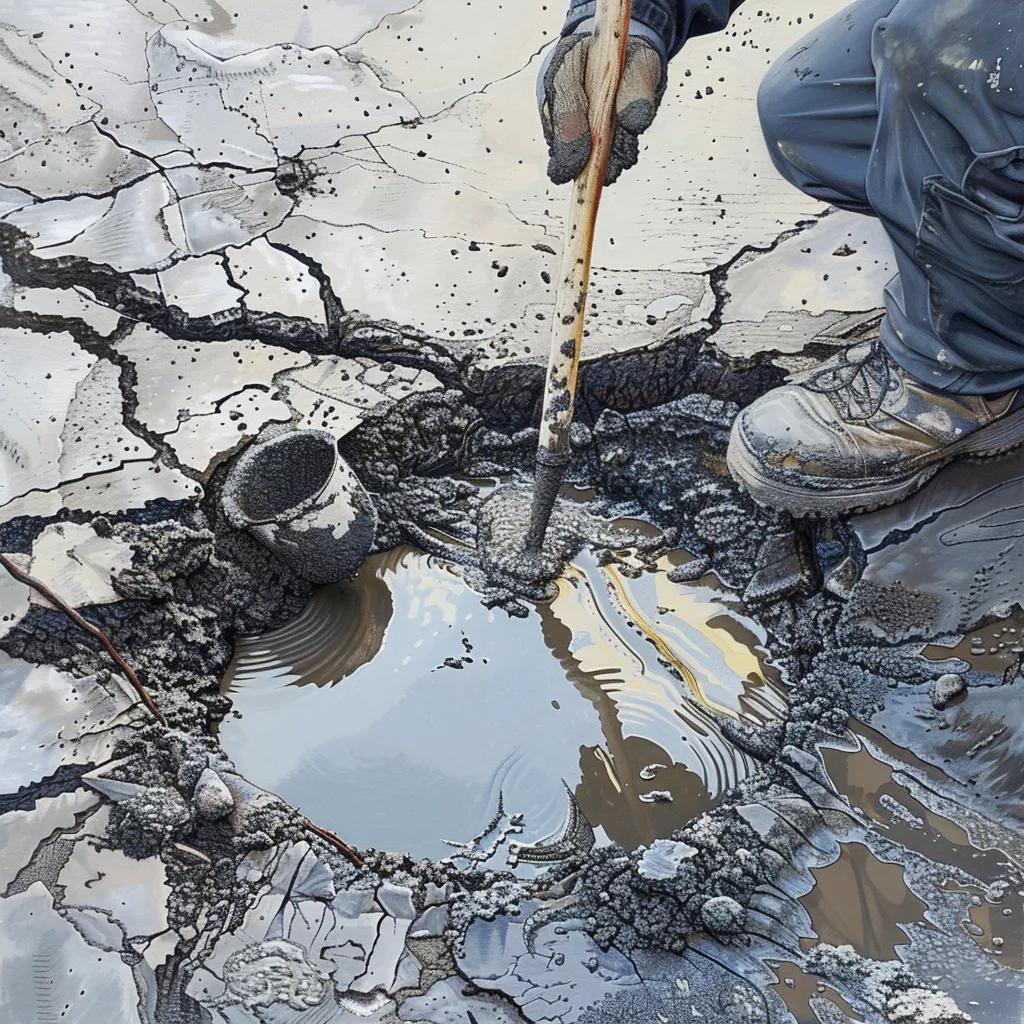
Concrete potholes are more than just an inconvenience; they’re a serious safety hazard. They form when existing cracks allow water to infiltrate, leading to soil erosion beneath the slab. Repeated traffic loads then cause the unsupported concrete to collapse. Key indicators that a pothole is forming include:
- Depressions with loose fragments
- Cracked edges surrounding voids
- Water pooling in noticeable low spots
Prompt identification and repair are critical to prevent extensive slab failure, costly full-depth replacements, and potential liabilities.
What Leads to Concrete Joint Deterioration?
Expansion and control joints are vital components designed to relieve stress by accommodating slab movement. However, joint failure is a common issue, occurring when old sealants crack, debris accumulates, or repetitive traffic abrades the edges. These deteriorated joints are problematic because they allow water intrusion, which can severely undermine the slab’s support and lead to more extensive damage.
What Is Efflorescence on Concrete and Why Does It Appear?
Efflorescence is that unsightly white, powdery deposit you often see on concrete surfaces. It forms when moisture migrates through the slab, dissolves soluble salts within the concrete, and then evaporates, leaving behind crystalline residues. While often considered a cosmetic issue, efflorescence is a clear signal of ongoing moisture problems that, if left unaddressed, can lead to deeper, more significant concrete deterioration.
What Are Other General Causes of Concrete Pavement Deterioration?
Beyond these specific defects, concrete pavements can degrade due to a range of broader factors, including corrosion of embedded steel, soil heave, chemical attack, and prolonged UV exposure. Furthermore, poor mix design, inadequate reinforcement, and insufficient sealing during installation can significantly accelerate wear and tear. A comprehensive understanding of these factors is essential for developing effective, long-term maintenance plans that protect your investment.
How Do You Repair Concrete Cracking Effectively?
Effective concrete crack repair is about more than just filling a gap; it’s about restoring the pavement’s structural integrity, preventing damaging moisture ingress, and maintaining its crucial load capacity. At OKC Parking Lot Maintenance, we know that successful repair begins with accurate crack classification, followed by the precise application of the right materials and proven techniques.
What Are the Types of Concrete Cracks and Their Repair Needs?
Not all cracks are created equal. Concrete cracks vary significantly by width and underlying cause, and each type demands a specific, tailored repair approach:
Accurately identifying the crack type is the first step to selecting the precise sealant or injection system needed for truly long-lasting performance and preventing future issues.
How Does Crack Sealing Prevent Further Damage?
Crack sealing is a critical preventive measure. It effectively blocks moisture entry, averting severe freeze-thaw damage, preventing soil erosion beneath the slab, and inhibiting unsightly weed growth. We utilize high-quality, flexible polyurethane and silicone-based sealants that bond securely to crack walls, accommodating natural slab movement while maintaining a durable, watertight barrier.
When Is Epoxy Injection or Slabjacking Required?
For more severe issues like wide or structural cracks, advanced solutions are necessary. Epoxy injection effectively restores the concrete’s tensile strength by bonding the crack faces back together. Meanwhile, slabjacking is employed to precisely lift settled slabs and fill voids with specialized grout. These advanced methods are essential when cracks exceed 1/8″ in width, or when slab misalignment creates dangerous trip hazards or significant drainage problems that threaten your property.
What Are the Steps to Prepare and Repair Concrete Cracks?
At OKC Parking Lot Maintenance, our proven crack repair process follows meticulous steps to ensure lasting results:
- We begin by thoroughly removing all debris and old sealant using specialized wire brushes or routers.
- Next, crack walls are meticulously cleaned with compressed air or a pressure washer to ensure optimal adhesion.
- For deeper cracks, a backer rod is precisely inserted to control sealant depth and ensure proper bonding.
- Our technicians then expertly inject epoxy or apply sealant with precision tools.
- The sealant is carefully smoothed and tooled flush with the surface for a seamless finish.
- Finally, we ensure the repair is allowed to fully cure before reopening the area to traffic, guaranteeing optimal adhesion and performance, especially crucial given Oklahoma City’s challenging temperature extremes.
When Should You Hire Professional Concrete Crack Repair Services?
While minor cracks might seem manageable, professional intervention is highly recommended when cracks are structural, extend continuously across multiple slabs, or when slab settlement leads to significant drainage issues. Our expert OKC Parking Lot Maintenance technicians are equipped to accurately assess load conditions, select the most effective specialized epoxy systems, and ensure rapid curing. This minimizes operational downtime for your business and delivers a durable, long-term solution.
How Can You Fix Concrete Spalling and Scaling Problems?
Addressing concrete surface deterioration effectively requires a precise diagnosis: understanding the difference between spalling and scaling, and then applying the exact restoration techniques needed for a lasting repair. That’s where our expertise comes in.
What Is the Difference Between Spalling and Scaling?
While both are forms of surface damage, spalling and scaling have distinct characteristics that dictate the appropriate repair method:
Accurately distinguishing between these patterns is crucial for directing the correct use of patching mortar versus thin resurfacer overlays, ensuring a durable and effective repair.
How Do You Repair Spalled Concrete Surfaces?
Repairing spalled concrete areas requires a meticulous approach to ensure lasting results. Our process involves:
- Carefully chiseling away all loose fragments until we reach sound, stable concrete.
- Applying a high-quality bonding agent to the thoroughly cleaned substrate for superior adhesion.
- Precisely placing polymer-modified repair mortar to expertly restore the original profile and strength.
- Finishing the surface to seamlessly match the adjacent concrete texture, ensuring a uniform appearance.
This proven method not only reinstates structural cover over any reinforcement but also effectively prevents further delamination and deterioration.
What Are the Best Methods to Repair Scaled Concrete?
For scaled concrete, the best approach involves carefully preparing the surface through grinding or light sandblasting to remove all delaminated paste. This is followed by the expert application of a micro-cement or thin-film overlay. Finally, sealing the surface with a breathable water repellent is essential to preserve its appearance and significantly enhance its resistance to future freeze-thaw cycles.
How Can You Prevent Spalling and Scaling in Pavements?
Proactive prevention is key to avoiding costly spalling and scaling issues. We recommend these essential measures:
- Applying a high-quality, penetrating concrete sealer every 2–3 years to protect the surface.
- Ensuring proper site drainage to eliminate standing water, a major contributor to freeze-thaw damage.
- Minimizing the use of harsh de-icing salts, or opting for less aggressive alternatives like calcium magnesium acetate.
Implementing these practices will significantly protect your pavement’s surface and drastically reduce the frequency and cost of future maintenance.
What Are the Best Solutions for Concrete Pothole Repair?
Potholes are more than just an inconvenience; they’re a significant liability. Proper pothole repair is essential for reinstating crucial load transfer capabilities and eliminating dangerous trip hazards. At OKC Parking Lot Maintenance, we ensure these repairs are performed with the highest quality patching materials and expert techniques for lasting results.
What Causes Potholes in Concrete Pavements?
Potholes in concrete pavements typically originate from a combination of factors: water infiltration, erosion of the underlying subbase soils, and repeated cyclic traffic loads that fracture the slab from beneath. Inadequate drainage and pre-existing construction defects can significantly exacerbate this destructive process, leading to rapid pothole formation.
How Do You Patch Concrete Potholes Correctly?
A truly effective and durable concrete pothole patch requires precision and the right materials. Our approach includes:
- We begin by squaring the hole with precise saw cuts to create strong, vertical edges.
- All debris is meticulously cleaned, and a bonding agent is expertly applied to the edges.
- A fast-set cement mix is then placed in layers, with each lift thoroughly compacted.
- Finally, the surface is finished with a trowel and properly cured under wet burlap or a curing compound.
This correct preparation and compaction are vital to delivering a patch that not only lasts but also resists future spalling and scaling.
What Are the Steps for Long-Lasting Pothole Repairs?
To ensure the utmost durability and longevity for your pothole repairs, we follow these critical steps:
- We excavate the subgrade until a stable, solid base is reached, addressing the root cause of the pothole.
- Subbase soils are then recompacted, and a geotextile is applied if necessary, to provide a robust foundation.
- Patch edges are meticulously glued with an epoxy primer for superior bonding.
- High-performance patching mortar is installed in 1–2" lifts, with precise vibration to eliminate voids.
- Finally, the repair is cured strictly according to manufacturer’s instructions before reopening to traffic, ensuring maximum strength and preventing early failure.
These comprehensive steps are essential for maintaining critical load-bearing capacity and preventing premature repair failure.
When Is Professional Pothole Repair Recommended?
While small potholes might tempt a DIY fix, complex or large potholes—especially those over 1 sq ft or with underlying soil voids—demand professional assessment and repair. OKC Parking Lot Maintenance specializes in these challenging repairs, offering rapid mobilization, expert subbase stabilization, and the use of high-performance materials. We deliver durable solutions for everything from busy fleet yards and bustling retail plazas to essential municipal lots, ensuring safety and longevity.
How Do You Repair and Maintain Concrete Joints?
Maintaining concrete joints isn’t just about aesthetics; it’s a critical practice that actively protects your entire pavement system from uncontrolled cracking and severe water damage. By preserving the integrity of both expansion and control joints, you safeguard your investment and extend its lifespan.
What Are Expansion and Control Joints in Concrete Pavements?
Understanding the role of joints is fundamental to concrete pavement health. Expansion joints are wider gaps, typically filled with compressible material, designed to accommodate the thermal expansion and contraction between concrete slabs. Control joints, on the other hand, are strategically sawed grooves that intentionally induce cracking at predetermined, controlled locations, preventing unsightly and damaging random fractures across the pavement surface.
What Causes Joint Deterioration and Failure?
Joint failure is a common issue that stems from several factors:
- The natural aging of sealants, leading to a critical loss of elasticity.
- Constant abrasion from vehicle traffic and heavy equipment.
- Accumulation of debris within the joint, preventing proper sealant adhesion.
- UV degradation of joint fillers, weakening their protective properties.
Critically, damaged joints create pathways for moisture ingress, which can lead to severe subgrade washout and undermine the entire pavement structure.
How Do You Repair Concrete Joints Step-by-Step?
Our professional joint restoration process ensures maximum effectiveness and longevity:
- We meticulously remove all old sealant and backer rod, clearing the joint to its full depth.
- Joint walls are thoroughly cleaned using wire brushes and compressed air to ensure optimal adhesion.
- A new backer rod, precisely sized to 25% of the joint width, is carefully inserted.
- High-performance polyurethane sealant is then expertly applied using a specialized caulking gun.
- Finally, the sealant surface is carefully tooled to form a proper, watertight seal and a clean, professional finish.
How Does Joint Sealing Prevent Further Pavement Damage?
Effective joint sealing is a powerful preventive measure. It actively maintains proper slab separation, precisely controls where cracks form, and crucially, blocks water from eroding vital subbase materials. Investing in well-sealed joints significantly extends your pavement’s overall lifespan and dramatically reduces future repair costs, protecting your investment.
What Is Concrete Efflorescence and How Can You Remove It?
While often seen as just a cosmetic issue, efflorescence on concrete surfaces signals underlying moisture problems. Effective efflorescence removal not only restores a clean, professional appearance but also indicates that these deeper moisture issues are being addressed.
What Causes Efflorescence on Concrete Pavements?
Efflorescence develops when moisture-soluble salts migrate from within the concrete to the surface as water evaporates. Common sources of this moisture include ground moisture, impurities in the mixing water, and even certain supplementary cementitious materials used in the concrete mix itself.
How Do You Remove Efflorescence Safely?
Safe and effective efflorescence removal requires careful attention to detail. We recommend these proven methods:
- Start with dry brushing using stiff nylon brushes to remove any loose, powdery salts.
- Follow with a thorough washing using a mild detergent and water, ensuring a complete rinse afterward.
- For stubborn deposits, a diluted muriatic acid rinse (typically a 1:10 ratio) can be applied, immediately neutralized with baking soda, and then thoroughly rinsed away.
These steps are designed to safely dissolve and flush away deposits without causing harm to your concrete surface.
How Can You Prevent Efflorescence from Returning?
To truly inhibit efflorescence from returning, a proactive approach to moisture control is essential:
- Apply a high-quality, breathable silane or siloxane water repellent to the concrete surface.
- Consider installing vapor barriers beneath new slabs to block moisture from below.
- Ensure proper site drainage is in place to effectively divert groundwater away from your pavement.
By focusing on both sealing and comprehensive moisture control, you effectively cut off the pathways for salt migration, keeping your concrete clean and clear.
When Should You Consult Professionals for Efflorescence Treatment?
While minor efflorescence can often be managed, persistent or extensive efflorescence is a clear indicator of chronic moisture intrusion. This often requires a professional assessment, including slab moisture testing, specialized membrane installation, or even full-depth repairs. OKC Parking Lot Maintenance offers comprehensive moisture diagnostics and expert remedial waterproofing solutions to address the root cause and ensure your pavement stays dry and pristine.
How Can You Prevent General Concrete Pavement Deterioration?
Protecting your concrete pavement investment for the long haul hinges on two critical factors: proactive maintenance and quality installation. This is especially true given Oklahoma City’s unique and challenging climate conditions.
What Are Common Causes of Concrete Damage?
Understanding the common culprits behind pavement damage is the first step to effective prevention. These include:
- Relentless freeze-thaw cycles that cause internal cracking and surface breakdown.
- Prolonged moisture exposure leading to subgrade erosion and instability.
- Chemical attack from harsh de-icing salts or industrial solvents.
- Corrosion of embedded reinforcement bars, which can lead to severe spalling.
- Initial inadequate curing or a poor mix design during installation.
Identifying these factors allows us to implement targeted prevention and maintenance strategies that truly work.
What Preventative Maintenance Practices Extend Pavement Life?
Consistent, regular maintenance is the most effective way to significantly extend your pavement’s service life and protect your investment:
- Conduct annual inspections to proactively identify emerging cracks and joint issues before they escalate.
- Perform bi-annual cleaning to remove abrasive debris and harmful chemical residues.
- Ensure all cracks and joints are professionally sealed well before the onset of the freeze-thaw season.
- Apply penetrating sealers periodically to drastically reduce water uptake and enhance durability.
This consistent upkeep is your best defense against costly full-depth repairs and disruptive operational downtime.
How Does Proper Installation Affect Pavement Durability?
The foundation of long-term pavement durability lies in the quality of its initial installation. Adhering to proper installation criteria—including the correct mix design, adequate reinforcement, and thorough curing—directly impacts how long your pavement will last:
Our meticulous attention to these critical attributes during installation minimizes shrinkage, prevents premature cracking, and significantly reduces your long-term maintenance needs.
Why Is Regular Parking Lot Maintenance Important in Oklahoma City?
For businesses and property managers in Oklahoma City, regular parking lot maintenance isn’t just a recommendation—it’s a necessity. Our city’s wide temperature swings and periodic freezes place immense, repeated stress on concrete surfaces. Routine, professional maintenance is crucial for preserving safety, actively preventing dangerous trip hazards, and significantly enhancing the curb appeal that attracts and retains customers.
How Can Professional Concrete Repair Services Minimize Disruptions and Costs?
Choosing professional concrete repair services from OKC Parking Lot Maintenance is a smart investment that directly minimizes disruptions and long-term costs. Our expert teams streamline repairs through rapid mobilization, the use of high-performance, durable materials, and efficient scheduling tailored to your business needs. By addressing issues early and applying industry-grade sealants and overlays, we not only reduce costly downtime but also significantly extend your pavement’s life, delivering truly cost-effective and lasting solutions.
Ultimately, maintaining your concrete pavement demands timely, accurate diagnosis, expert repairs, and proactive preventive strategies tailored to each specific defect. Whether you’re grappling with unsightly cracks, damaging spalling, dangerous potholes, or persistent efflorescence, applying the right methods—from precision crack sealing and epoxy injection to professional resurfacing and sealing—is essential to restore both functionality and appearance.
Ready to safeguard your pavement investment? For expert assessment, a free, no-obligation quote, and professional, durable installations right here in Oklahoma City, don’t hesitate. Contact OKC Parking Lot Maintenance today and let us help you protect your property’s value and appeal.